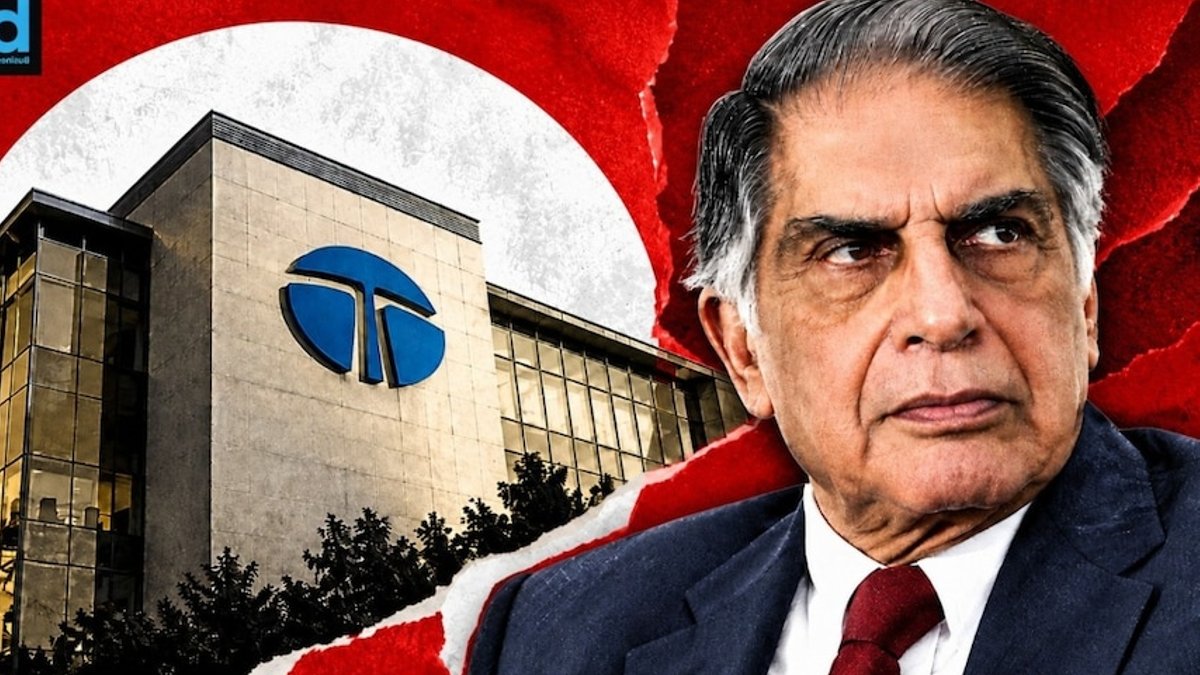
The concept of listing Tata Sons has been debated before, first surfacing during Ratan Tata’s leadership in the early 2000s while he headed both Tata Sons and Tata Trusts. This time, however, the Reserve Bank of India is pushing for the 158-year-old conglomerate to go public—a stark contrast to past discussions.
In his book, Thomas Mathew, a former government official and authorized biographer of Ratan Tata, reveals that discussions about listing TCS also brought up an old conversation about listing Tata Sons. TCS went public in August 2004.
Ishaat Hussain, former Finance Director of Tata Sons, told Mathew that many people advised Ratan Tata to take Tata Sons public. Ratan Tata was even pursued by investment bankers who presented attractive scenarios to make it happen.
The Listing Debate
According to the book, during a Tata Sons meeting in the early 2000s, a decision was made to take the holding company public. However, Ratan Tata remained silent on the matter, not expressing any support, as Hussain revealed.
The decision to list Tata Sons caused anxiety among many senior Tata members, and by the next morning, they had changed their minds. Noshir Soonawala, Vice-Chairman of Tata Sons, and Hussain led the effort to reconsider.
Mathew writes that the decision to list Tata Sons would have meant losing control over many companies, as the parent company would lose the freedom to take important decisions regarding the companies under it.
Soonawala was especially concerned that listing would result in the Tatas losing control of the conglomerate. The plan was abandoned, and not pursuing the listing of Tata Sons was the most significant decision Ratan Tata made, or rather, did not make, as chairman.
Mathew said that Ratan Tata feared listing would undermine the group’s philanthropic model. Ratan Tata had shared his concerns with Mathew multiple times, believing that listing would shift the focus from philanthropy to quarterly profits, making social welfare a secondary goal.
Read Also: Investors seek tax reforms in India
A Change of Heart
In May and July 2025, Sir Ratan Tata Trust and Sir Dorabji Tata Trust passed separate resolutions, exhorting Tata Sons to take immediate action to ensure it was not listed. However, in September 2026, everything changed, with the same directors who were against listing suddenly doing a volte-face.
Mathew explained that Ratan Tata appointed these individuals to the Tata Sons and Tata Trusts boards because he believed they fully supported the group’s philosophy. Their continued presence on the board is only justified if they remain committed to the Tata philosophy.
Noel Tata, chairman of Tata Trusts, which owns a 66 per cent stake in Tata Sons, is dead against the listing of the holding company. The RBI rejected Tata Sons’ application to remain as an unregistered investment company, directing the holding company to take necessary actions to ensure full compliance with all guidelines and instructions.
Mathew believes the RBI is changing its rules unfairly. Initially, the central bank classified Tata Sons as a core investment company due to its debt. After repaying around Rs 22,000 crore, Tata Sons applied to surrender its CIC license, but the RBI’s criteria shifted unexpectedly.
Surprisingly, the RBI then held that becoming debt-free does not afford it exemption from the Upper Layer NBFC category. The central bank added that any entity with access to public funds, through entities, or with standalone assets of ₹1 lakh crore or more, would still fall under the CIC category.
The RBI’s sudden change in its criteria raises the issue of whether the central bank was genuinely concerned about systemic risks or whether its intention was to bring Tata Sons within the definition, no matter what. Tata Sons had applied for deregistration in March 2024 to avoid the listing, and the RBI’s rejection of this application has significant implications for the company’s future.
Noel Tata said that the RBI’s communication “does not say that listing is the only option.” He said the central bank had advised the group to ensure immediate compliance with the rules applicable to a non-banking financial company in the Upper Layer. The Tata group is now faced with the challenge of considering the potential impact of listing on its philanthropic model while also handling these regulatory requirements.