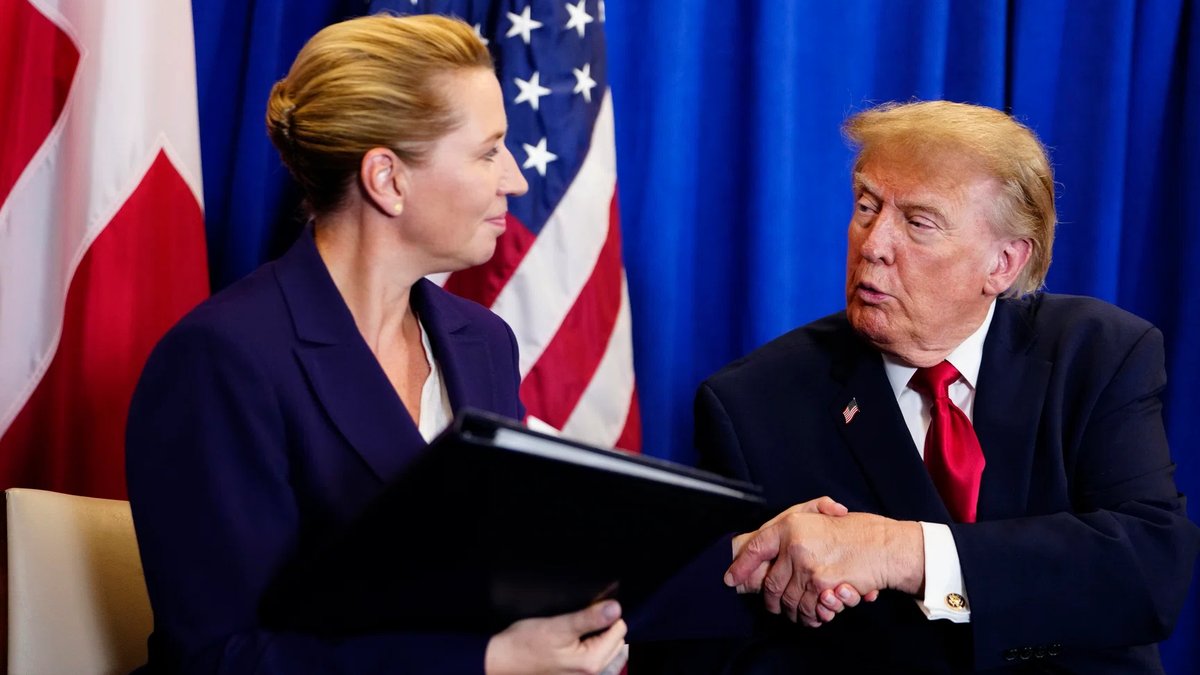
Donald Trump signed a security pact with Denmark and Greenland on Tuesday, concluding a prolonged dispute over Arctic territory while pledging U.S. military expansion on the island. The ceremony took place in New York alongside Danish Prime Minister Mette Frederiksen and Greenland’s leader, Jens-Frederik Nielsen, with the full agreement text released immediately afterward.
Security Agreement Terms
Under the deal, the United States gains permanent oversight of Greenland’s security and operational needs, Trump announced during the UN General Assembly earlier that day. He emphasized that the arrangement would allow the U.S. to “We will have the complete ability to do what is necessary to defend the American continent and also Europe and other places,” while also launching immediate planning for a substantial military buildup in key locations. The agreement identifies Narsarsuaq and Mestersvig as primary base sites, alongside plans to expand the existing Pituffik Space Base. It also includes provisions for additional defense zones and integrates Greenland into the NATO-led Golden Dome defense network, granting Washington authority over foreign military deployments and critical infrastructure in the territory.
The document further stipulates that if Greenland achieves independence, both Denmark and Greenland must guarantee its continued NATO membership. Non-NATO states will be barred from establishing permanent military installations or maintaining a continuous armed presence without prior approval from the involved parties.
Diplomatic Background
The agreement resolves a standoff that began in January when Trump threatened to acquire Greenland, prompting Denmark to mobilize troops to the island with live ammunition and preparations to sabotage airport runways in case of a forced U.S. landing. The crisis deepened into a major transatlantic rupture between NATO allies. Negotiations later shifted after Trump met with NATO Secretary General Mark Rutte at the World Economic Forum in Davos, where they agreed on a framework to settle the dispute. Since then, officials from the U.S., Denmark, and Greenland worked through a dedicated task force to finalize the terms.
Read Also: Annual Reports Shift Focus From Volume to Quality
Denmark’s Foreign Minister, Lars Lokke Rasmussen, called the earlier period a “damaging phase” in transatlantic relations, expressing hope the agreement would mark its end. The resolution follows broader diplomatic challenges for Trump, including conflicts in the Middle East and Ukraine, alongside domestic economic concerns ahead of the midterm elections.
Signing Ceremony Statements
During the signing, Trump commended Denmark as a “remarkable, beautiful nation,” noting the negotiations had “strengthened ties.” When asked whether the deal fell short of full U.S. ownership of Greenland, he redirected focus to the strategic security gains for America. Frederiksen clarified that the agreement upholds Denmark’s sovereignty and Greenland’s right to self-determination while preventing adversaries from exerting control or influence in the region. She stressed that the deal enhances allied military presence in the Arctic.
Nielsen described the agreement as “We are making sure that they will not be allowed to get any control or significant influence in Greenland, and we are making sure that more allies are present in the Arctic at the same time,” reaffirming Greenland’s alignment with the U.S. and Western alliances. “Your security is our security, and our security is your security,” he stated, emphasizing the partnership’s enduring nature.
Arctic Geopolitical Impact
The deal marks a major shift in U.S. Arctic strategy, reinforcing Washington’s footprint in a region increasingly vital due to climate-driven accessibility. Though Greenland remains under Danish authority, the agreement grants the U.S. unprecedented operational control, enabling it to counter emerging rival influences in the high north. The arrangement strengthens NATO’s northern defenses amid rising tensions with Russia and China’s expanding Arctic activities.