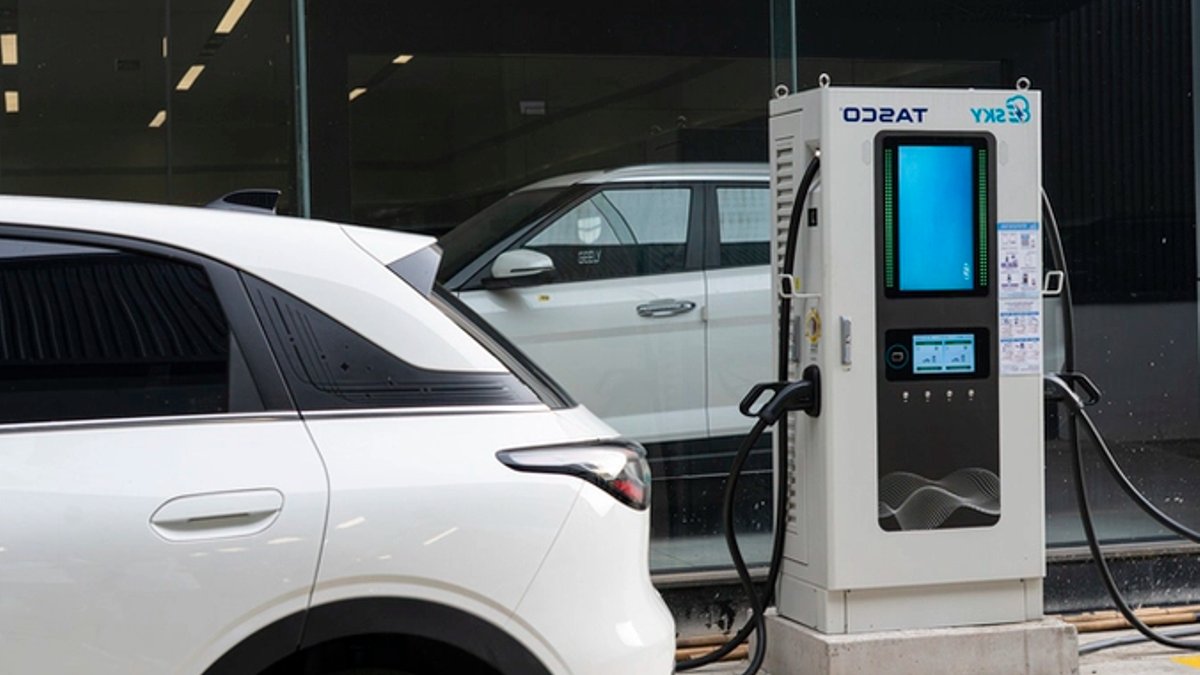
Vietnam EV charging prices differ widely across station brands, creating a complex situation for drivers who must time their top‑ups to manage costs.
Variable rates across major networks
A recent survey of chargers in Ho Chi Minh City shows each operator applying its own pricing model. Some stations charge a flat fee per kilowatt‑hour, while others split rates into off‑peak, regular and peak periods.
At TMT Egreen, rates effective from July 15 are VND 3,651 (about $0.14) per kWh during off‑peak hours, VND 4,984 ($0.19) in regular hours and VND 7,436 ($0.28) at peak times, tax included. A ride‑hailing driver with a BYD M6 (55.4 kWh battery) estimates a full charge costs roughly VND 202,000 ($7.67) off‑peak and up to VND 412,000 ($15.64) during peak periods.
“Plugging in at the wrong time can add over VND 210,000 [$8] to a single charge, even before accounting for power loss or parking fees,” the driver said.
Related: Seven dead in Vietnam sleeper bus blaze
Other networks set different prices. BYD Bitcar dealership stations charge VND 4,212‑6,048 ($0.16‑0.23) per kWh, translating to about VND 233,000‑335,000 ($8.85‑12.72) for a full BYD M6 charge. Esky lists a rate near VND 7,000 ($0.27) per kWh, making a comparable charge cost roughly VND 388,000 ($14.73), not counting promotional discounts. V‑Green, which mainly serves VinFast vehicles, maintains VND 3,858 ($0.15) per kWh, and VinFast drivers benefit from free charging through 2029.
Industry insiders note that the price gap is not solely due to electricity input costs. Operators must also cover site rent, equipment depreciation, upkeep and revenue‑sharing deals with location partners.
Sharing infrastructure amid competition
Vietnam’s EV charging scene is shifting from isolated networks toward shared use.
Ford Vietnam and Tasco Auto recently signed a reciprocal charging agreement, allowing Ford owners to use Tasco‑distributed brand dealerships—including Geely, Lynk & Co, Volvo, Zeekr and Lotus—and vice versa. Dealerships for Omoda, Jaecoo and Wuling have taken similar steps, granting third‑party vehicles access to their chargers.
Related: Hong Kong commercial property slump worsens with tighter lending
BYD Auto Vietnam partnered with Futa EV Power to explore installations at Phuong Trang Group’s bus terminals, parking lots and highway rest stops. Ride‑hailing platform Grab invested in Eboost, a network focused on residential complexes, office towers and malls, leveraging driver movement data to identify high‑demand sites for future stations.
Nguyen Quang Khai, CEO of Phu My Ford, said Vietnamese consumers have moved past early adoption, making now the optimal time to scale charging infrastructure. He added that a dense, reliable network will be an important driver for mainstream EV sales.
Shared charging networks let brands capitalize on each other’s strengths, and drivers gain broader access with less range anxiety and shorter wait times. Beyond electricity sales, stations are becoming commercial anchors. Tracy Luong, an investor in the EV One brand, highlighted that drivers often patronize nearby restaurants, hotels and retail outlets while waiting, creating new revenue streams for property developers.
The expanding web of shared chargers could smooth out price disparities as competition grows. If more operators adopt interoperable standards and align pricing structures, drivers may find it easier to predict costs, and the sector could attract additional investment.