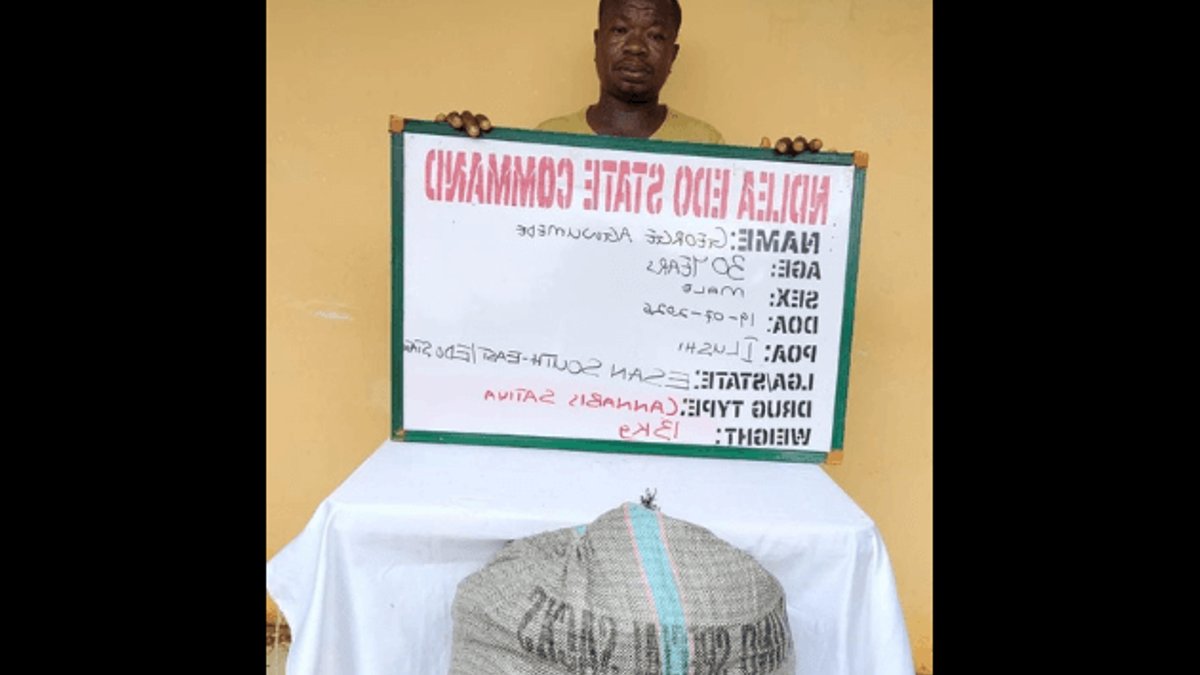
The National Drug Law Enforcement Agency (NDLEA) Edo State Command intercepted over 1,300 kilograms of cannabis during a joint operation with the Nigerian Army. The massive seizure took place at a four-bedroom bungalow in the Illushi community, where officials dismantled a suspected drug warehouse located within a residential area of the state.
State Commander Mitchell Ofoyeju announced the results of the raid in a statement released on Tuesday in Benin City. The target was a home situated in the Esan South-East Local Government Area, which had been converted to store large quantities of illicit substances. This location choice, deep within a housing settlement, highlights a disturbing trend of traffickers using private homes to hide their operations.
The seizure details
Authorities recovered a total of 1,359 kilograms of illegal drugs during the search. The inventory included 1,273 kilograms of skunk cannabis and 86 kilograms of cannabis seeds. The operation yielded fifty-two giant bags and three gallons of seeds, indicating a sophisticated logistical capability capable of moving heavy volumes across the region.
Two suspects were taken into custody in connection with the operation. Ojore Onweze, 45, was apprehended while in possession of 60 kilograms of cannabis, and 30-year-old George Agwumede was nabbed with over 13 kilograms of the drug. Both men face immediate legal charges related to drug trafficking under the state’s narcotics laws.
Related: Amex offers grants to small businesses
Risks of residential warehousing
The conversion of residential homes into storage facilities for narcotics presents distinct risks to neighborhood safety. Unlike industrial warehouses, private dwellings lack the ventilation and security infrastructure required to store volatile substances. When traffickers stockpile drugs in living spaces, the risk of accidental fires or exposure to chemical residues increases, potentially endangering entire families sharing the same street. This practice blurs the lines between legitimate habitation and criminal enterprise, making it harder for neighbors to identify and report suspicious activity.
Ofoyeju expressed concern over the use of such residential spaces, describing the trend as dangerous and a force that must be confronted. He praised the Nigerian Army for their cooperation during the raid, noting that the quantity of the seizure demonstrates a commitment to dismantling trafficking networks. The command is currently working to uncover connections and potential accomplices as investigations continue.
Officials have urged citizens to participate in the campaign, stating that the fight against drug abuse is a collective responsibility that requires the vigilance of every resident. The agency emphasized that protecting children and other vulnerable groups is a priority, and they hope recent successes will inspire more community engagement in the fight.