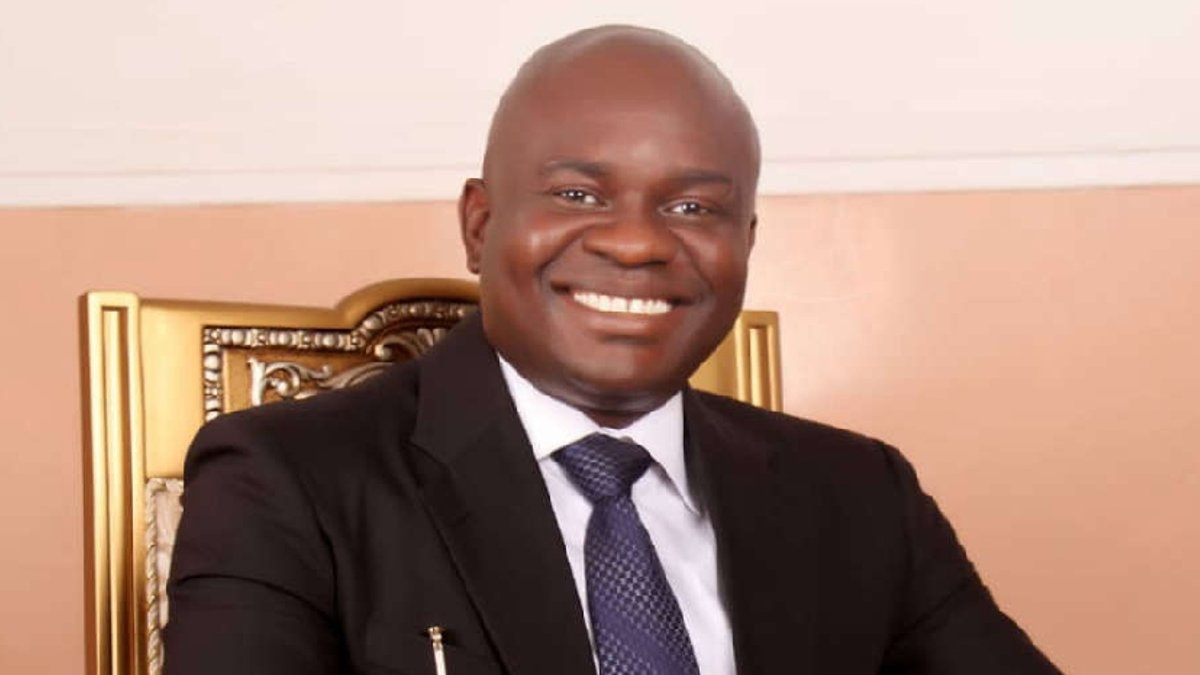
Farah Dagogo, a former representative for Degema Federal Constituency, has accused the Rainbow Coalition led by Nyesom Wike of hindering development in Rivers State.
Dagogo blames coalition for stalled progress
Speaking at a stakeholders’ meeting, the African Democratic Congress (ADC) gubernatorial hopeful described the alliance as an “assemblage of political interests that have entrenched stagnation and prioritized personal gain over the development of Rivers State.” He added, “The truth is, it is the Rainbow Coalition against the entire Rivers State. The Rainbow Coalition people are bearers of the chain of bondage militating against the state.” Dagogo said the group benefits from the “retrogression of our state” and intends to test its influence at the 2027 general elections.
The former lawmaker also criticized the coalition’s narrative surrounding the Bodo‑Bonny Road project, arguing that credit for its near‑completion has been misattributed. He recounted a 70‑year history of advocacy, beginning with the late King Eugene William Dappa Pepple II, who in the 1950s asked for a road to replace sea evacuation in emergencies. Subsequent leaders, including Chief Dappa Biriye and the current Amanyanabo King Edward Asimini William Dappa Pepple III, pursued the project through various military and civilian administrations.
Historical context of the Bodo‑Bonny Road
According to Dagogo, the road was about 95 percent finished when the current administration took office, making any claim of sole ownership “deceptive.”
Related: Nigeria needs proactive governance approach
In a broader sense, the situation mirrors past attempts by political factions in Nigeria to appropriate development achievements for electoral advantage. Similar patterns have emerged in other states where infrastructure projects become bargaining chips, often leaving the underlying issues unresolved.
The ADC candidate further announced plans to address infrastructure deficits, boost agriculture, and support small businesses across the 23 local government areas. “We are not coming to manage poverty. We are coming to end it,” he said, promising to serve rather than rule over the people of Rivers State.
His message resonates with voters seeking tangible change.